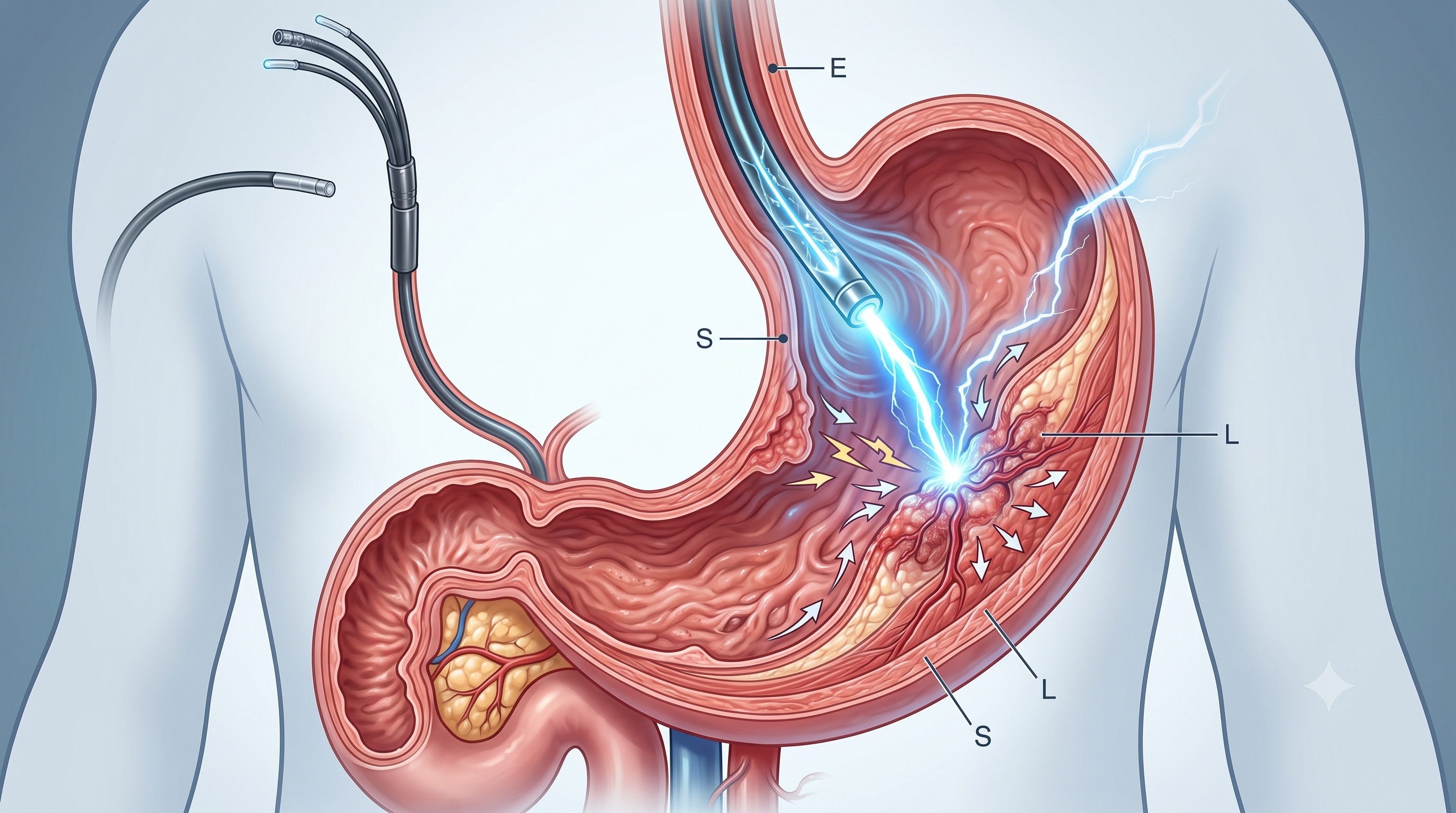
Argon Plasma Coagulation (APC)
Argon Plasma Coagulation (APC) is an advanced bronchoscopic technique used to control bleeding and treat abnormal tissue inside the airways. It uses ionized argon gas to deliver controlled electrical energy to targeted areas without requiring direct contact with the tissue. APC can be particularly useful in interventional pulmonology for managing certain airway lesions, bleeding, and abnormal tissue growth.
What Is Argon Plasma Coagulation?
Argon Plasma Coagulation is a non-contact thermal treatment performed using a specialized probe during bronchoscopy. Argon gas is released through the probe and becomes electrically ionized, allowing controlled energy to reach the targeted tissue.
The technique can coagulate superficial tissue and control bleeding while helping preserve surrounding structures. The amount of energy used is carefully controlled according to the location and condition being treated.
When Is APC Used in Pulmonology?
Bronchoscopic APC may be considered for selected airway conditions, including:
- Control of bleeding from airway lesions
- Treatment of superficial endobronchial abnormal tissue
- Management of certain airway tumors or tumor-related tissue
- Removal or reduction of selected obstructing tissue
- Treatment of some vascular lesions within the airway
- Management of recurrent or persistent airway bleeding
The suitability of APC depends on the patient's condition, the location of the lesion, and findings during bronchoscopy.
How Is Argon Plasma Coagulation Performed?
APC is generally performed as part of a bronchoscopy procedure. After appropriate preparation and anesthesia or sedation, a bronchoscope is introduced into the airways.
A specialized APC probe is guided through the bronchoscope toward the targeted area. Controlled argon plasma energy is then delivered to the abnormal tissue. Depending on the treatment objective, APC may help coagulate bleeding vessels or reduce superficial abnormal tissue.
The procedure is performed under careful monitoring, and the treatment settings are adjusted according to the airway lesion and clinical requirement.
Benefits of Bronchoscopic APC
Argon Plasma Coagulation can offer several advantages in appropriately selected patients:
- Non-contact treatment technique
- Useful for controlling airway bleeding
- Precise treatment of superficial airway lesions
- Can help reduce selected obstructing tissue
- Performed through bronchoscopy without an external surgical incision
- May be combined with other interventional bronchoscopic techniques
Safety and Recovery
APC is generally considered a specialized bronchoscopic procedure and should be performed by an experienced interventional pulmonology team. As with any bronchoscopic intervention, potential complications can include bleeding, airway irritation, infection, oxygen-level changes, or other procedure-related complications.
Patients are monitored after treatment and may be advised to follow specific precautions depending on the underlying condition and extent of treatment.
Argon Plasma Coagulation by Dr. Aastha Gupta
Dr. Aastha Gupta, Consultant Pulmonologist & Interventional Pulmonologist, provides evaluation and advanced care for patients with complex airway and respiratory conditions. Argon Plasma Coagulation may be considered as part of an individualized interventional pulmonology treatment plan when clinically appropriate.
If you have symptoms such as recurrent airway bleeding, persistent respiratory problems, or an airway lesion identified during evaluation, a specialist assessment can help determine whether bronchoscopic APC or another treatment approach is appropriate.