Thoracocentesis
Thoracocentesis for Pleural Fluid Diagnosis and Relief
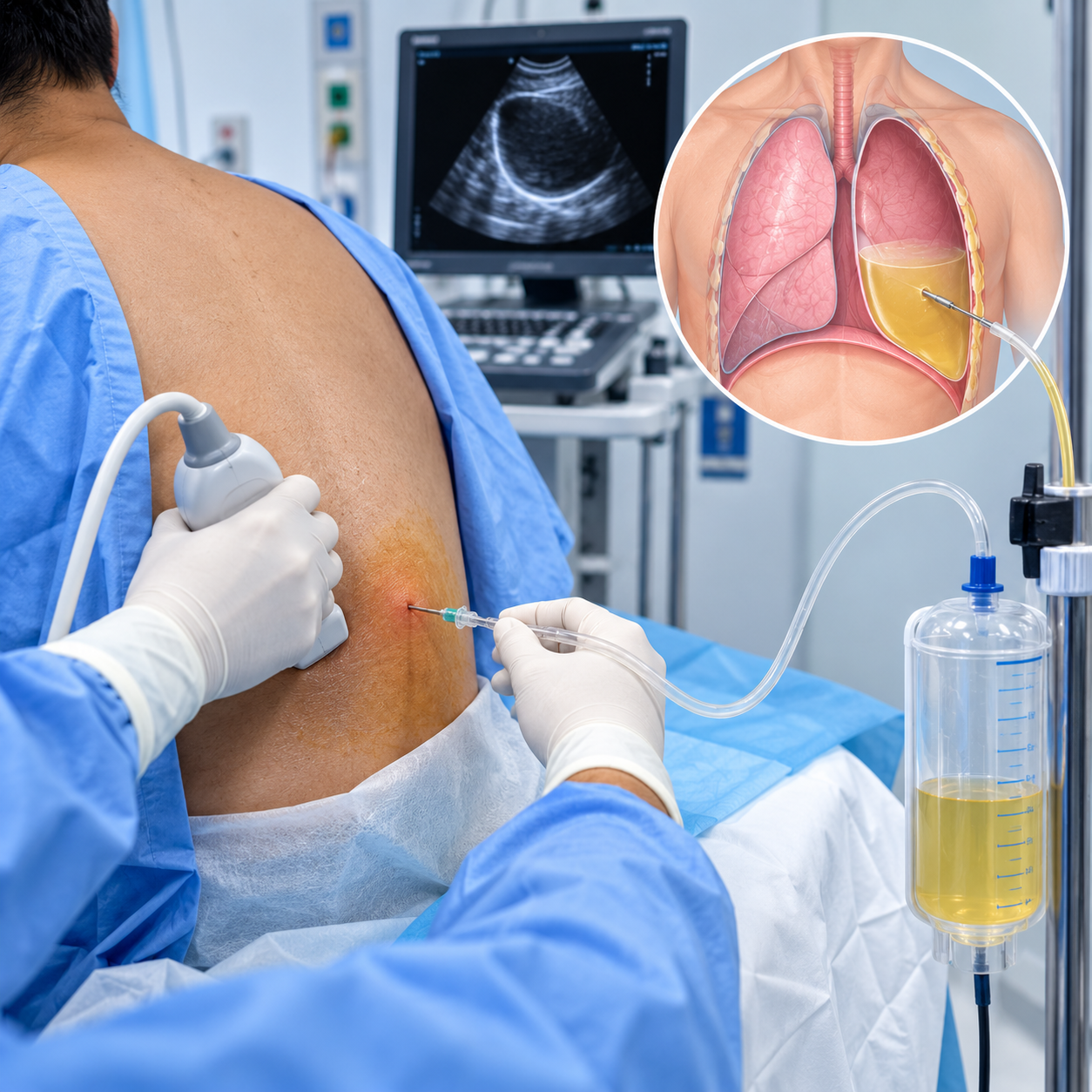
Thoracocentesis, also called a pleural tap, is a minimally invasive procedure used to remove excess fluid from the pleural space—the area between the lungs and the chest wall. The procedure can help relieve breathlessness and chest discomfort caused by pleural effusion and can also provide pleural fluid for laboratory testing to determine its underlying cause.
Dr. Aastha Gupta, Consultant Pulmonologist and Interventional Pulmonologist, provides specialized evaluation and minimally invasive management of pleural diseases and pleural effusion.
What Is Thoracocentesis?
Under appropriate medical supervision, a thin needle or catheter is inserted through the chest wall into the pleural space to remove accumulated fluid. The procedure is commonly performed with ultrasound guidance, which can help identify the fluid and improve the accuracy and safety of the procedure.
The collected pleural fluid may be sent to a laboratory for testing to help determine why the fluid has accumulated.
Why Is Thoracocentesis Performed?
Thoracocentesis may be recommended for two main reasons: diagnosis and treatment.
Diagnostic Thoracocentesis
When the cause of a pleural effusion is unclear, a sample of the fluid can be examined for information about infection, inflammation, cancer and other underlying conditions.
Pleural fluid testing may include:
- Cell count and differential
- Protein and LDH levels
- Glucose and pH
- Microbiological testing
- Cytology for abnormal or cancerous cells
- Additional specialized tests when clinically indicated
Therapeutic Thoracocentesis
Removing excess pleural fluid can help relieve symptoms, particularly shortness of breath and chest pressure, in selected patients with a significant or symptomatic pleural effusion.
Conditions That May Cause Pleural Effusion
Pleural effusion is not a disease itself but a sign of an underlying condition. Possible causes include:
- Pneumonia
- Tuberculosis
- Heart failure
- Liver or kidney disease
- Cancer
- Pulmonary embolism
- Autoimmune and inflammatory diseases
- Chest injury or surgery
Identifying the underlying cause is essential for determining appropriate long-term treatment.
How Is Thoracocentesis Performed?
Before the procedure, the doctor reviews the patient's medical history, imaging and medications. Ultrasound guidance is commonly used to locate the fluid and select an appropriate insertion site.
After cleaning and numbing the skin with local anaesthetic, a needle or catheter is carefully inserted into the pleural space. Fluid is then withdrawn and collected for testing when required.
The patient's oxygen level and other vital signs may be monitored during the procedure.
Benefits of Thoracocentesis
Thoracocentesis can provide both diagnostic and therapeutic benefits:
- Helps identify the cause of pleural effusion
- Provides fluid for laboratory analysis
- Can relieve breathlessness caused by fluid accumulation
- Minimally invasive procedure
- Ultrasound guidance can improve procedural safety
- May help determine further treatment
Risks and Aftercare
Although thoracocentesis is generally considered a minimally invasive procedure, complications can occur. Possible risks include pain, bleeding, infection and pneumothorax (air around the lung). The treating doctor assesses individual risks before the procedure.
After thoracocentesis, patients may be observed for a period depending on the amount of fluid removed and their overall condition. Additional imaging may be recommended when clinically indicated.
Thoracocentesis by Dr. Aastha Gupta
Dr. Aastha Gupta provides specialized pleural disease and interventional pulmonology care, including evaluation and management of pleural effusion.
If you have unexplained pleural fluid, persistent breathlessness or recurrent pleural effusion, consultation with a pulmonologist can help determine whether thoracocentesis or another pleural procedure is appropriate for your condition.