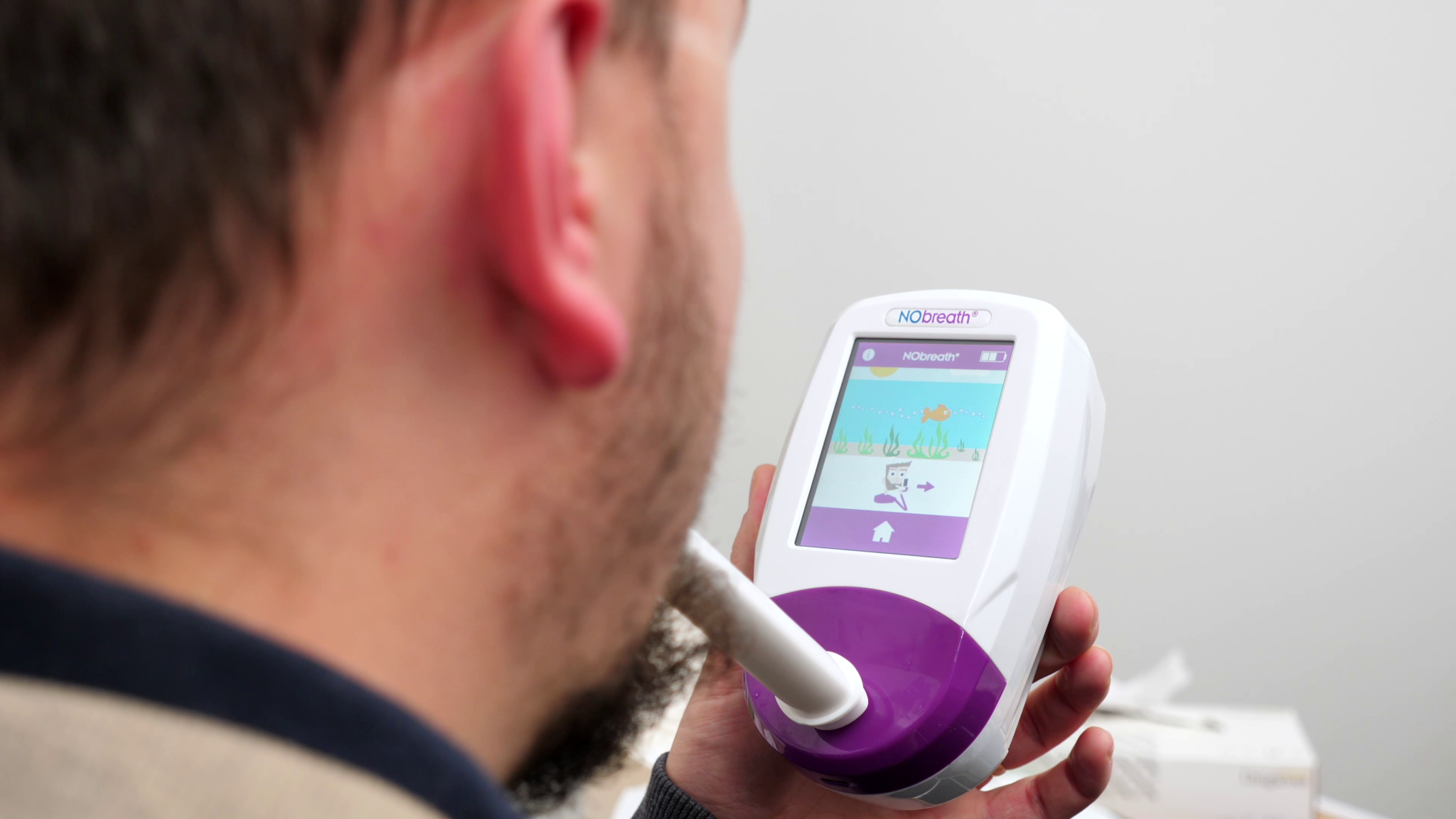
FeNO (Breath Test)
Advanced FeNO Testing for Better Asthma and Airway Inflammation Assessment
FeNO (Fractional Exhaled Nitric Oxide) is a simple, non-invasive breath test used to measure the level of nitric oxide in exhaled air. Increased levels of exhaled nitric oxide can indicate type 2 airway inflammation, which is commonly associated with asthma. FeNO testing can support the evaluation of asthma and help healthcare professionals assess airway inflammation alongside symptoms, examination and other lung function tests.
Dr. Aastha Gupta, Consultant Pulmonologist and Interventional Pulmonologist, provides comprehensive respiratory evaluation, including advanced diagnostic testing for asthma and other airway conditions.
What Is a FeNO Breath Test?
The FeNO test measures the concentration of nitric oxide in the air a person breathes out. Nitric oxide is naturally produced by cells lining the airways. Higher levels may indicate inflammation in the airways.
Unlike blood tests or invasive procedures, FeNO testing is performed simply by breathing into a specialized testing device. The procedure is quick and generally takes only a few minutes.
Why Is FeNO Testing Performed?
FeNO testing can be useful when evaluating patients with suspected or diagnosed asthma. It may help provide additional information when respiratory symptoms such as cough, wheezing or breathlessness have an unclear cause.
FeNO testing may be used to:
- Support the evaluation of suspected asthma
- Assess type 2 airway inflammation
- Help evaluate patients with persistent respiratory symptoms
- Support asthma diagnosis alongside other clinical tests
- Monitor airway inflammation in selected patients with asthma
- Assess response to inhaled corticosteroid treatment
- Help guide treatment decisions in appropriate patients
FeNO results should not be interpreted on their own. A pulmonologist considers the result together with symptoms, medical history and other investigations.
How Is the FeNO Test Performed?
FeNO testing is simple and non-invasive. The patient is generally asked to breathe in through the testing device and then exhale steadily through a mouthpiece according to the instructions provided.
The device measures the amount of nitric oxide in the exhaled breath and provides a result within a short period.
Proper technique is important for obtaining a reliable measurement. Factors such as smoking, recent respiratory infections, diet and certain medications may influence FeNO levels.
FeNO Test for Asthma
Asthma is associated with different patterns of airway inflammation. In some patients, particularly those with type 2 or eosinophilic airway inflammation, FeNO may be elevated.
A higher FeNO level can support the presence of type 2 airway inflammation, while a lower result does not necessarily rule out asthma. FeNO is therefore best used as part of a comprehensive asthma assessment rather than as a standalone diagnostic test.
Benefits of FeNO Testing
FeNO testing offers several advantages:
- Non-invasive and painless
- Quick and easy to perform
- No blood sample required
- Provides information about airway inflammation
- Can support asthma assessment
- Useful for monitoring selected asthma patients
- Can complement pulmonary function testing
Who May Benefit From FeNO Testing?
FeNO may be considered for patients experiencing symptoms such as:
- Persistent or recurrent cough
- Wheezing
- Shortness of breath
- Chest tightness
- Suspected asthma
- Poorly controlled asthma
- Recurrent airway inflammation
The decision to perform FeNO testing depends on the patient's symptoms and clinical evaluation.
FeNO Testing by Dr. Aastha Gupta
Dr. Aastha Gupta provides specialized pulmonary evaluation and asthma care, using appropriate diagnostic tests to better understand respiratory symptoms and airway inflammation.
If you experience persistent cough, wheezing, breathlessness or suspected asthma, a FeNO breath test may provide useful information about airway inflammation as part of a comprehensive respiratory assessment.