Tracheal Stenting
Advanced Tracheal Stenting for Airway Obstruction
Tracheal stenting is an advanced interventional pulmonology procedure used to keep a narrowed or blocked trachea open and improve airflow. A tracheal stent is a small expandable device placed inside the airway to support the tracheal wall and maintain an adequate passage for breathing.
Tracheal stenting may be considered for selected patients with tracheal narrowing, airway obstruction, malignant airway compression or certain benign airway conditions when other treatment approaches are not suitable or sufficient.
Dr. Aastha Gupta, Consultant Pulmonologist and Interventional Pulmonologist, provides specialized interventional airway care for patients with complex tracheal and respiratory conditions.
What Is Tracheal Stenting?
The trachea, or windpipe, carries air from the throat to the lungs. When the trachea becomes narrowed or blocked, airflow can be restricted and may result in significant breathing difficulties.
During tracheal stenting, an appropriately sized stent is placed inside the narrowed section of the airway. The stent helps maintain the airway opening and allows air to pass more freely.
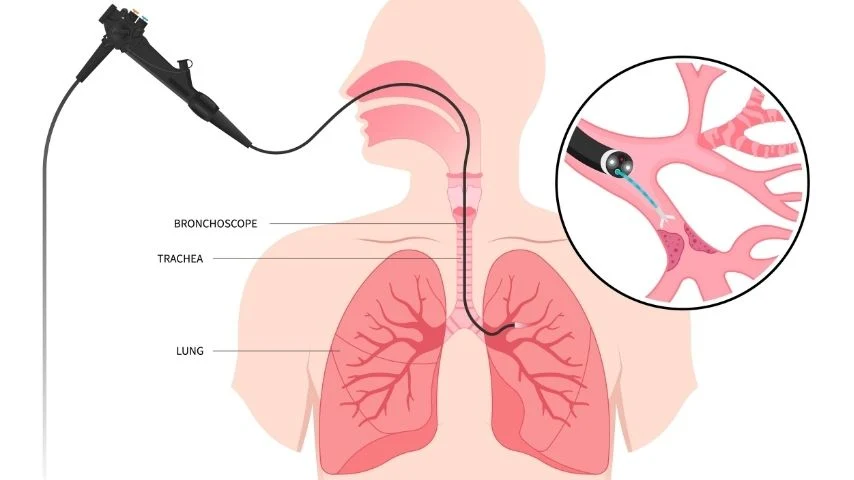
The procedure is generally performed using bronchoscopy, which allows the pulmonologist to visualize the airway and accurately position the stent.
When Is Tracheal Stenting Recommended?
Tracheal stenting may be considered in selected patients with:
- Tracheal stenosis or narrowing
- Malignant airway obstruction
- Tumour-related compression of the trachea
- Benign tracheal obstruction
- Airway narrowing following certain procedures or injuries
- Selected cases of tracheobronchomalacia
- Complex central airway obstruction
The underlying cause, location and severity of the obstruction are assessed before deciding whether stenting is appropriate.
Symptoms of Tracheal Obstruction
Tracheal narrowing can produce symptoms that may sometimes resemble asthma or other respiratory conditions. Common symptoms include:
- Shortness of breath
- Noisy breathing or stridor
- Persistent cough
- Wheezing
- Difficulty breathing during physical activity
- Chest discomfort
- Recurrent respiratory infections
Severe airway obstruction can become a medical emergency and requires immediate assessment.
How Is Tracheal Stenting Performed?
Before the procedure, the airway is evaluated using CT imaging, bronchoscopy and other appropriate investigations. The size and location of the airway narrowing help determine the type and size of stent required.
During bronchoscopy, the narrowed portion of the trachea is visualized. The stent is then carefully positioned across the affected area to restore and maintain airway patency.
The patient is monitored throughout the procedure, including oxygen levels and other vital signs.
Benefits of Tracheal Stenting
For appropriately selected patients, tracheal stenting can:
- Improve airflow through the narrowed airway
- Reduce symptoms caused by airway obstruction
- Improve breathing and exercise tolerance
- Restore airway patency
- Provide rapid relief in selected cases of central airway obstruction
Stenting is generally part of a broader treatment plan. Treating the underlying cause of the airway narrowing remains important.
Follow-Up and Stent Care
Regular follow-up after tracheal stenting is important. Patients may require clinical assessment and, in selected cases, follow-up bronchoscopy to check the position and condition of the stent.
Potential complications can include mucus accumulation, infection, migration, granulation tissue formation or recurrent airway narrowing. Patients should report new or worsening breathing difficulties, persistent cough or other concerning symptoms to their treating doctor.
Tracheal Stenting by Dr. Aastha Gupta
Dr. Aastha Gupta provides specialized interventional pulmonology and advanced airway management, including evaluation and treatment of complex tracheal and central airway conditions.
If you have unexplained breathlessness, noisy breathing, persistent cough or diagnosed tracheal narrowing, a detailed airway evaluation can help determine whether tracheal stenting or another airway intervention is appropriate for your condition.