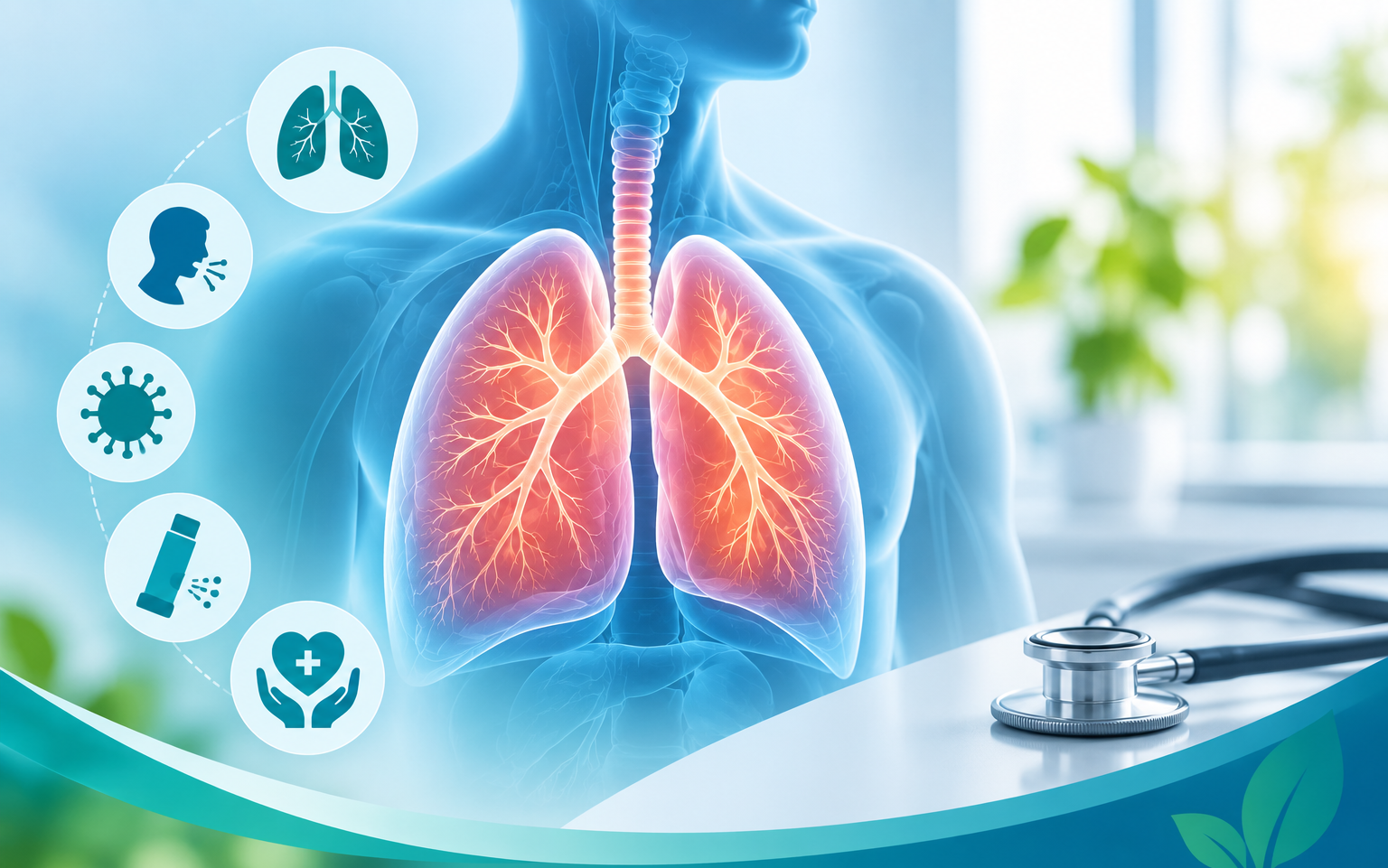
Respiratory Health Tips, Treatments & Interventional Pulmonology Insights
Good respiratory health is essential for maintaining energy, physical activity, and overall quality of life. Your lungs work continuously to provide oxygen to the body, but factors such as air pollution, smoking, allergies, infections, and occupational exposure can affect lung function.
Recognizing respiratory symptoms early and seeking appropriate medical care can help in the diagnosis and management of lung conditions. Dr. Aastha Gupta, Consultant Pulmonologist & Interventional Pulmonologist, provides specialized care for a wide range of respiratory and pulmonary conditions.
Understanding Respiratory Health
Respiratory health refers to the proper functioning of the lungs, airways, and other structures involved in breathing. Problems affecting these systems can lead to symptoms such as:
- Persistent cough
- Wheezing
- Shortness of breath
- Chest tightness
- Excessive mucus
- Recurrent respiratory infections
- Reduced ability to perform physical activities
While occasional respiratory symptoms may occur with common infections or environmental exposure, persistent or recurring symptoms should be medically evaluated.
Common Respiratory Conditions
Pulmonary diseases can affect people of all ages and may range from temporary infections to chronic conditions requiring long-term management.
Common respiratory conditions include asthma, COPD, bronchitis, pneumonia, respiratory allergies, and other lung disorders. Some patients may also have lung nodules, airway abnormalities, or other findings that require specialized investigation.
Treatment depends on the underlying cause, severity of symptoms, medical history, and diagnostic findings.
Practical Tips for Better Lung Health
Protecting your lungs involves making healthy choices and reducing exposure to respiratory irritants.
Avoid Smoking
Smoking is an important risk factor for several lung diseases. Avoiding tobacco and secondhand smoke can help protect respiratory health.
Reduce Air Pollution Exposure
Limit exposure to dust, smoke, and polluted air whenever possible. On days with poor air quality, consider reducing prolonged outdoor exposure and following local air-quality recommendations.
Stay Physically Active
Regular physical activity can support cardiovascular and respiratory fitness. Exercise should be appropriate for your individual health condition.
Protect Yourself at Work
People working around dust, chemicals, fumes, or other respiratory irritants should use suitable protective equipment and follow workplace safety practices.
Manage Existing Conditions
Patients with asthma, COPD, or other chronic respiratory conditions should follow their prescribed treatment plan and attend recommended follow-up appointments.
Respiratory Treatments & Pulmonary Care
Treatment for respiratory diseases varies depending on the diagnosis. Medical management may include inhaled medications, allergy management, infection treatment, pulmonary rehabilitation, or other approaches when appropriate.
A pulmonologist may recommend diagnostic tests such as pulmonary function testing, chest imaging, or bronchoscopy to better understand a patient's respiratory condition.
What Is Interventional Pulmonology?
Interventional pulmonology is a specialized area of pulmonary medicine that uses minimally invasive procedures to diagnose and manage selected lung and airway conditions.
Procedures such as bronchoscopy, airway stenting, endobronchial procedures, and other advanced techniques may be considered depending on the patient's condition. These procedures can assist in evaluating abnormalities within the airways and lungs and may provide treatment for certain complex respiratory problems.
Expert Respiratory Care by Dr. Aastha Gupta
Dr. Aastha Gupta, Consultant Pulmonologist & Interventional Pulmonologist, provides comprehensive evaluation and specialized management for respiratory and lung conditions. Her approach combines clinical assessment, appropriate diagnostic investigations, medical treatment, and advanced interventional techniques when indicated.
Patients experiencing persistent cough, breathlessness, wheezing, recurrent chest infections, or other ongoing respiratory symptoms should consider professional evaluation rather than relying solely on temporary symptom relief.
Prioritize Your Lung Health
Healthy lungs are important at every stage of life. Avoiding tobacco, reducing exposure to pollutants, staying active, and seeking timely medical advice can support better respiratory health.
With advances in pulmonology and interventional pulmonology, patients with complex lung and airway conditions have access to increasingly specialized diagnostic and treatment options. Early evaluation and personalized care can help address respiratory problems appropriately and support long-term lung health.
Your Specialist

Dr. Aastha Gupta
Consultant Pulmonologist & Interventional Pulmonologist
MD (Pulmonary Medicine) | Fellowship in Interventional
Pulmonology | 11+ Years of Experience